
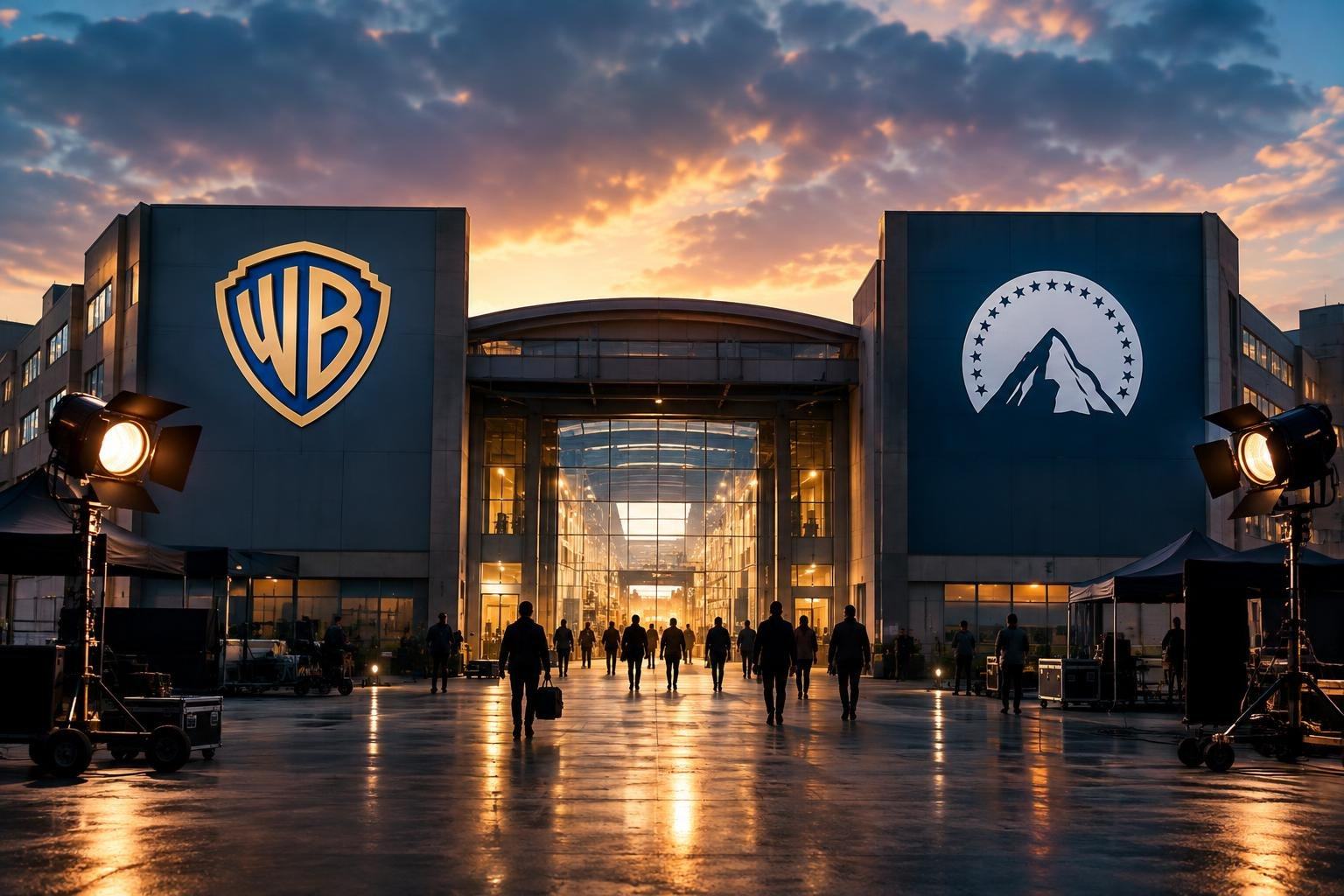
Two of television’s biggest production engines are set to become one. Skydance is combining Warner Bros. Television Group and Paramount Television Studios into a new organization, Warner Bros. Television Studios, scheduled to launch in early 2027. Until then, the two businesses will continue operating independently.
The scale is striking: the combined unit will house more than 120 active television series and an unusually varied collection of franchises. But the bigger question is what a single studio structure means for the people who make those shows—and for the networks, streamers and other partners that buy them.
A portfolio stretching from “Ted Lasso” to “Harry Potter”
The announced roster spans familiar hits and projects still on the way. It includes “The Pitt,” “Georgie & Mandy’s First Marriage,” “Ted Lasso,” “Reacher,” “Marshals,” “Landman” and “Emily in Paris,” alongside “Harry Potter and The Philosopher’s Stone” and the upcoming “Neuromancer.” The range is a reminder that television studios often work across very different audiences and formats, rather than serving a single channel or genre.
That breadth could make the new operation a powerful home for projects seeking backing and distribution relationships. Skydance says the studio will serve both its own platforms and third-party partners across the industry. The merger does not, by itself, announce a new home, release plan or creative change for any listed series. The companies have not yet detailed how individual productions will be affected.
Channing Dungey and Matt Thunell will lead the new studio as co-presidents, overseeing its creative departments and scripted and unscripted programming. Their remit also includes BET Studios and Warner Bros. International Television Production’s studios around the world. Dungey will continue as chair of Skydance Global Cable Media, which oversees more than 50 cable brands from Warner Bros. Discovery and Paramount.
One studio, but CBS remains separate
The reshuffle is not a consolidation of every television operation into one shop. CBS Studios will remain a separate entity under president David Stapf, with CBS Studios International, Skydance Sports Entertainment and See It Now Studios operating under its umbrella. Both CBS Studios and Warner Bros. Television Studios will report to George Cheeks, Skydance TV co-chair and chief content officer.
Cheeks described the combination as a way to bring together talent, resources and established programming. For creative teams, the structure could offer access to a wider network of production capabilities and relationships. For buyers and viewers, though, the benefits will depend on how the studios use that scale—not simply on the number of titles in their catalogue.
Dungey and Thunell have both held senior television roles, and the announcement points to their previous time working together at Netflix as a foundation for the partnership. Their public statements emphasize supporting creative talent and developing programming. Those are aims rather than guarantees: the new leadership will still have to balance creative priorities with the financial demands driving the reorganization.
The financial pressure behind the move
Skydance has pledged to find at least $6 billion in savings related to its merger as it faces nearly $80 billion in net debt. Its co-CEOs, David Ellison and Ynon Kreiz, have identified areas including real estate, labor, technology, marketing and procurement as sources of potential savings. The studio combination sits within that wider cost-cutting effort, though no specific savings target for the television unit has been announced.
The workforce context is already significant. Skydance began offering some employees voluntary buyouts in October, ahead of a formal layoff announcement, and is requiring employees to return to the office five days a week. Cheeks said the three studio leaders would meet with their teams in the coming weeks, with human resources to share further information as plans are finalized.
So the immediate story is not that a familiar show is changing hands or disappearing. It is that a large part of television’s production landscape is being reorganized, with creative leadership and cost control arriving in the same announcement. The new studio’s real test will be whether combining these legacies gives storytellers more room to work—or makes the financial logic of consolidation more visible than the creative ambition.