
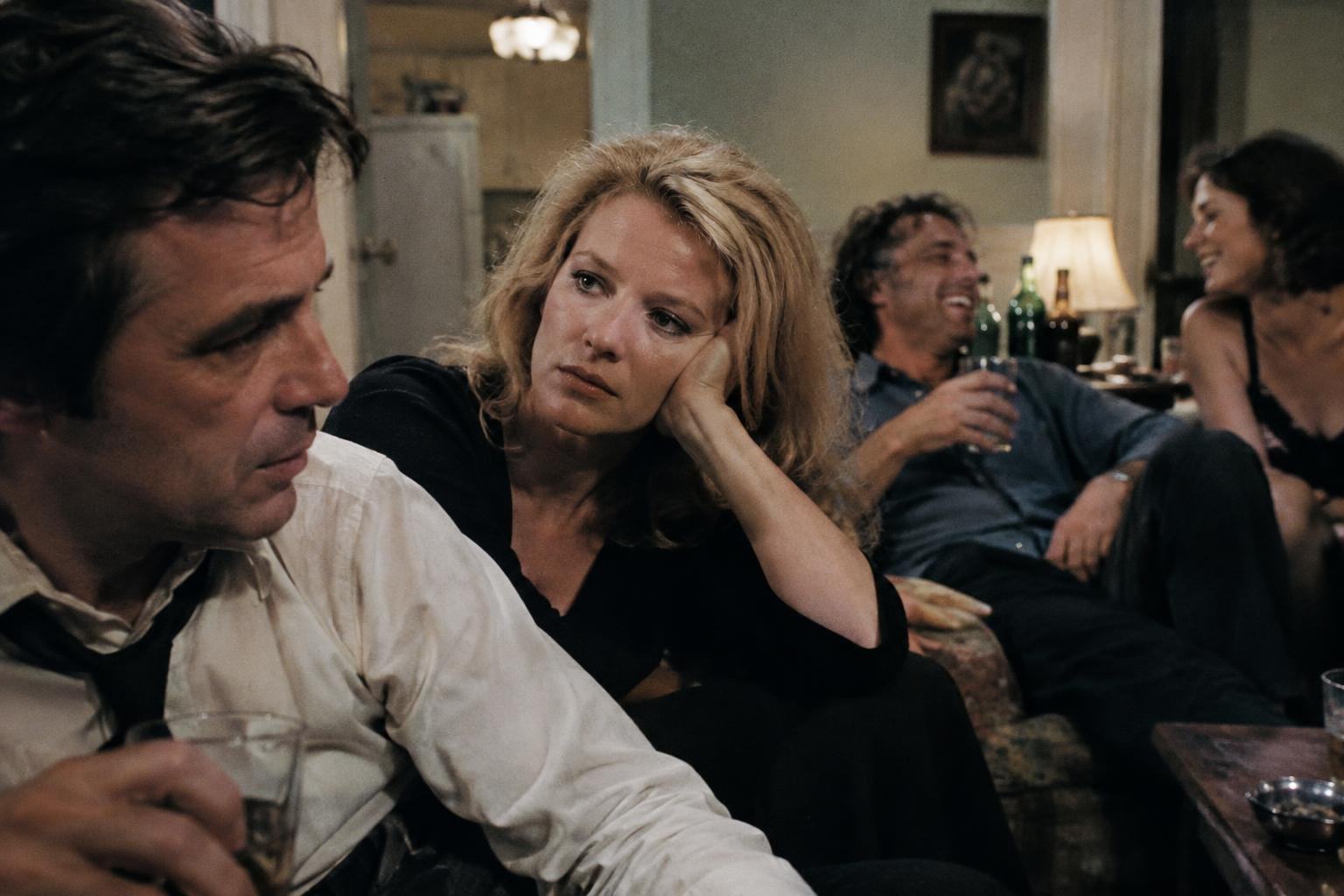
In Faces, a marriage does not end with a grand confrontation so much as spill into a long, messy night. John Cassavetes’ 1968 film follows a middle-aged husband and his wife through an encounter with infidelity, drinking and laughter that curdles into distress. Its unruly intimacy was not just a stylistic choice: it was bound up with how the film was made.
Cassavetes shot and edited the 130-minute drama in his own home, working with friends who often took on several jobs behind and in front of the camera. The production stretched across three years and cost $275,000—a modest sum by Hollywood standards. Half a century after its first screenings, the film remains a vivid example of how limited resources can shape a movie’s creative identity.
A rough surface with a precise purpose
Grainy 16mm photography, handheld camerawork and tight close-ups give Faces an unsettled, almost observational quality. Conversation can be difficult to catch; performances veer from loud comedy to exposed vulnerability. The effect is less like watching a carefully arranged drama than being allowed to sit uncomfortably close to people losing control of the story they tell about themselves.
That roughness can be mistaken for a lack of craft. Cassavetes, an actor as well as a director, drew sharply shaped performances from his cast, even when the style seemed spontaneous. The film’s reputation for improvisation is misleading: Gena Rowlands pushed back against the idea that Cassavetes’ scripts were simply made up on set. The looseness is part of the performance, not proof that there was no plan.
The distinction matters. A shaky camera or overlapping dialogue can suggest naturalism, but neither automatically produces emotional truth. In Faces, the unsettled form keeps attention on shifts in expression and mood: a boast becomes a plea, a joke becomes a humiliation. The movie asks viewers to read the people in the room, not just follow the plot.
When the crew is also the community
Cassavetes repeatedly worked with a close circle that included Rowlands, producer and cinematographer Al Ruban, and actor Seymour Cassel. The collaborators were not simply a cheaper substitute for a conventional crew. Their commitment helped make an unconventional production possible, while the sense of a shared undertaking is part of what gives the film its intimate, lived-in energy.
There were no seasoned technicians on the shoot, Cassavetes said in the short documentary Making Faces. The team made mistakes and found ways to keep going, even using people to help create camera movements when proper equipment was unavailable. That DIY approach was not a universal recipe—most filmmakers cannot rely on friends willing to work for little or nothing—but it demonstrated that technical limitations need not dictate a film’s emotional reach.
Money came together gradually: the production began with $10,000 and grew to $275,000. Cassavetes also acted in other films, including The Dirty Dozen and Rosemary’s Baby, helping finance his own work. The result was not made outside the industry’s reach altogether; rather, he used work within it to support a project on his own terms.
Independent in more than one sense
Faces also challenged the idea that a film’s success had to begin with conventional production and distribution. Cassavetes was willing to consider letting the picture circulate through universities—or even keeping it from public view. That attitude put control over the work ahead of any guarantee of a commercial pathway.
The film did reach a wider audience, and the Academy recognised its work: Cassavetes received a nomination for original screenplay, while Cassel and Lynn Carlin were nominated for their performances. Its formal risks did not prevent it from being taken seriously. Instead, its reception helped make visible a different possibility for American cinema, one associated with Cassavetes’ earlier Shadows and later with independent filmmaking more broadly.
What Faces offers now is not a simple instruction to make movies cheaply. It is a reminder that a film’s polish is not the same thing as its insight. Cassavetes used a house, a small budget and a trusted group of collaborators to bring viewers close to ordinary people behaving badly, bravely and unpredictably. The camera may wobble; the attention never does.