A sudden noise in the dark still has its place in horror. But some of 2026’s most intriguing films are building unease from more than a well-timed jolt: a familiar commute becomes a trap, a podcast microphone seems to invite something sinister, and even a chimpanzee can turn a holiday into a survival test.
That range is part of the appeal in a year that has also brought attention to films including Primate, Whistle, Cold Storage, Undertone and the sequel to Ready or Not. Their approaches differ, but they point to a lively question for horror fans: what can the genre make frightening once the audience knows the old tricks?
Everyday spaces become the threat
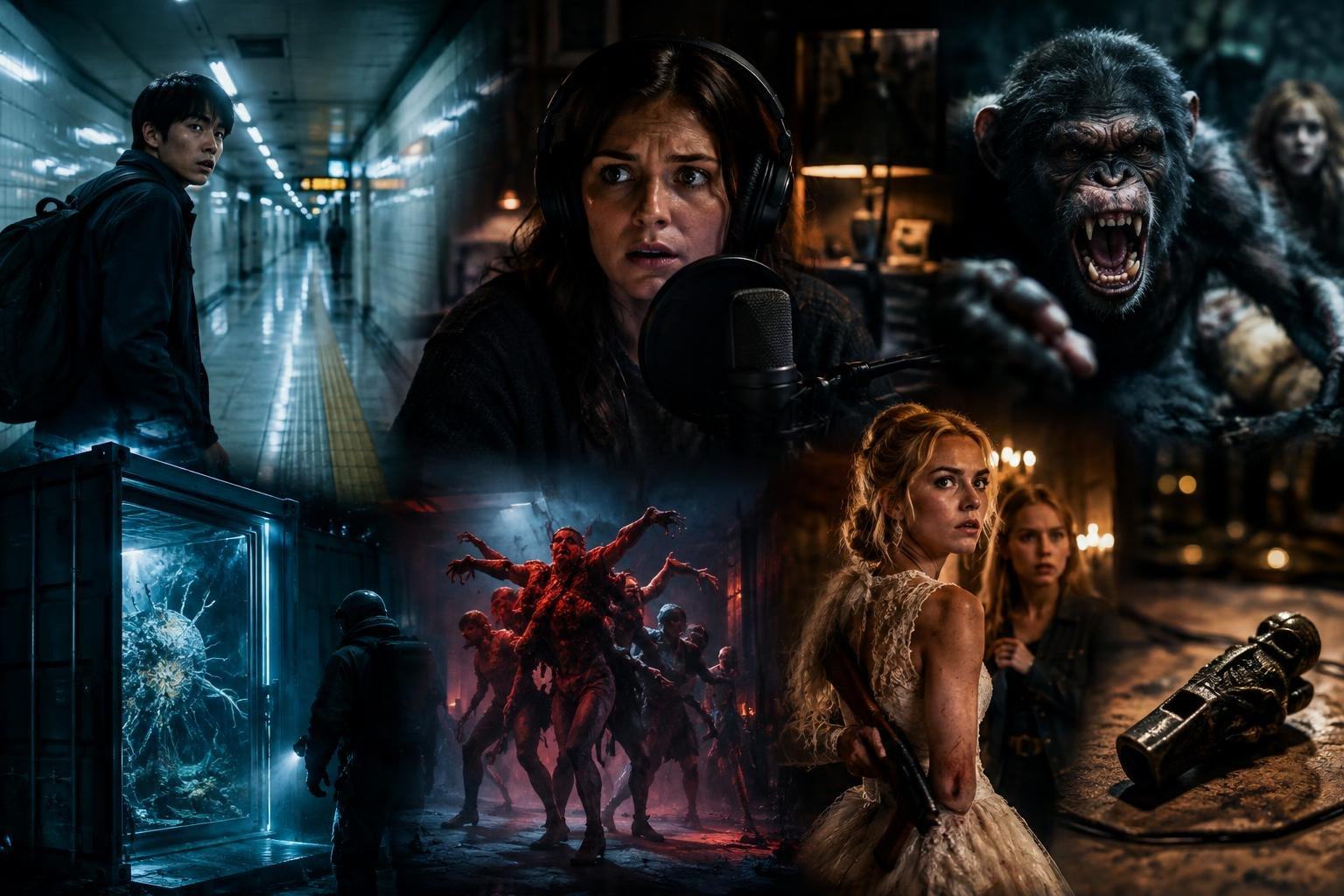
In Exit 8, director Genki Kawamura turns Tokyo’s subway corridors into a disorienting puzzle. A young man finds himself in a maze of white-tiled passages, where escape depends on noticing what has changed and resisting the pull of familiar routines. The terror is less about a monster charging into view than the creeping suspicion that you can no longer trust your own sense of direction.
That simple setup gives the film room to play with a recognisable modern anxiety: being stuck in a system that keeps offering the same choices, while the way out remains just out of sight. Its premise comes from a puzzle-solving video game, but the screen version leans into atmosphere—endless corridors, unsettling sounds and sudden hazards—to make repetition feel oppressive.
Undertone finds another route into the familiar. The film centres on a horror-podcast co-host whose scepticism is tested by apparent evidence of demonic activity. Its sound design does much of the unsettling work, shifting the listening experience into part of the scare. That is a neat fit for a story about people who make a living discussing fear: the familiar equipment of the job starts to feel less like protection than an open door.
There’s more than one way to make a creature scary
Primate puts a group of traumatised teenagers up against a rabid chimpanzee. The setup has the direct, contained tension of an animal-in-peril thriller, but its effectiveness depends on making a relatively small threat feel unpredictable. The film’s approach, as described by critics, is not to shrink from violence but to build tension before each burst of it.
At the other end of the scale, Cold Storage sends its danger underground. Adapted by screenwriter David Koepp from his 2019 novel, the sci-fi horror comedy follows a mind-controlling space fungus held in a military container beneath a small-town storage facility. That combination of an enormous biological threat and a decidedly unglamorous setting gives the story a playful, retro creature-feature flavour.
Then there is the zombie action film from Train to Busan director Yeon Sang-ho, which escalates the familiar infected horde with a group of dancers whose bodies combine into a larger threat. It is an example of how horror can renew an established monster not by hiding it, but by changing what the audience thinks a body can do.
Blood, but with character attached
The sequel to Ready or Not returns Samara Weaving as a hunted bride, now alongside her character’s sister, played by Kathryn Newton. Its class-war premise and high body count may be familiar territory, but the central pleasure is watching a protagonist fight back without losing the humanity that makes her more than a killing machine.
Whistle, meanwhile, builds its threat around an Aztec death whistle: hearing its sound is linked to dying in the way fate has already set out. The high-school setting and inventive, macabre premise give the film the flavour of a throwback, while the young cast helps keep the danger emotionally grounded.
These films do not abandon jump scares, gore or monsters. They use those tools alongside other sources of dread—disorientation, sound, social tension and the limits of the body. That may be the most useful way to think about this year’s horror: not as a contest to see what can make audiences flinch, but as a reminder that fear has many doorways. Sometimes the most unsettling one looks like a corridor you have already walked down.