
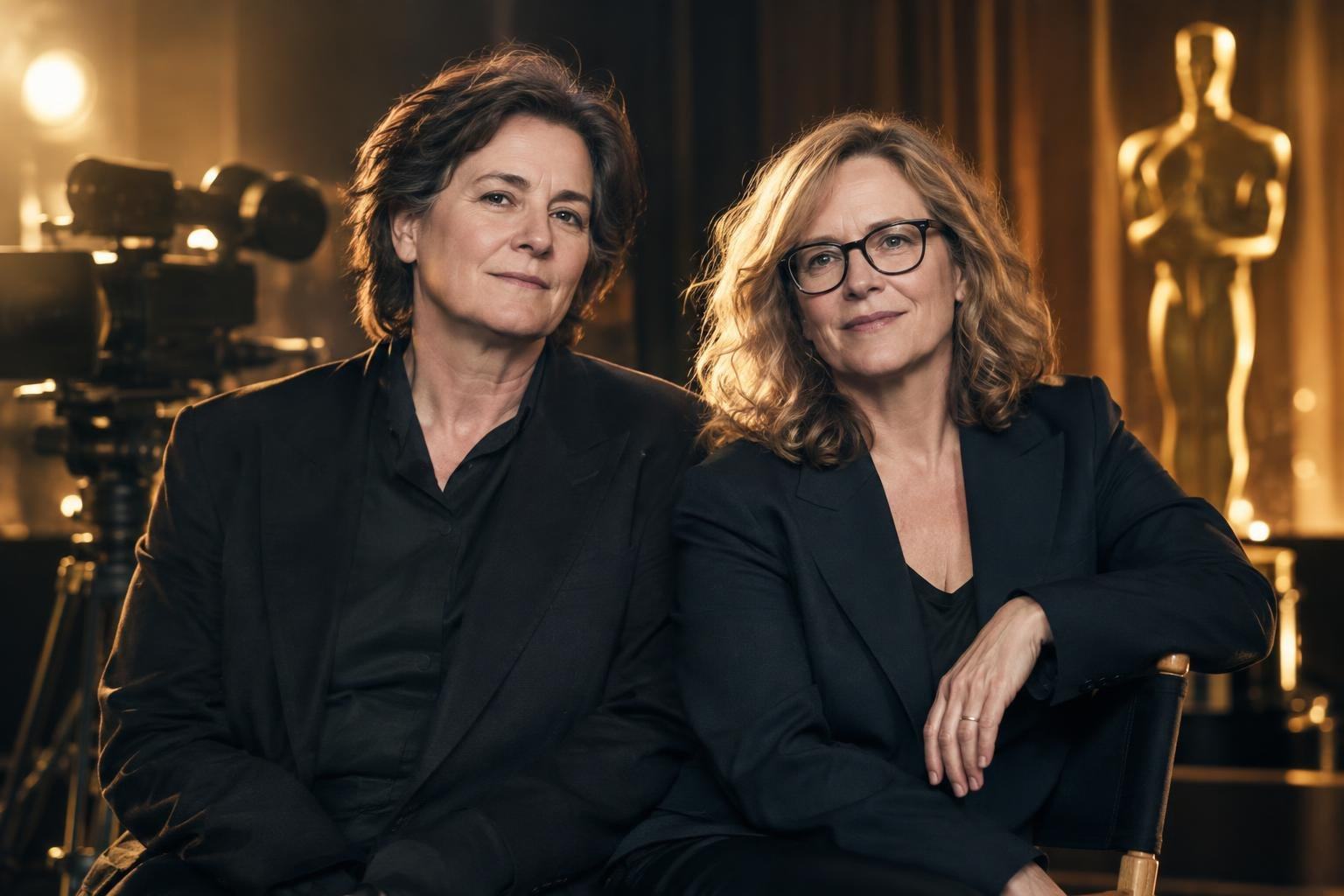
When the Governors Awards are presented on Nov. 15, producers Christine Vachon and Pamela Koffler will share a distinction usually discussed in the same breath as cinema’s most influential makers. The co-founders of Killer Films are receiving the Irving G. Thalberg Memorial Award, an honour for producing that recognises the people who help bring films into being.
The award is one of several recognitions at this year’s ceremony. Glenn Close, Ridley Scott and animator Floyd Norman are also set to receive honorary Oscars. But Vachon and Koffler’s joint award offers a particular chance to look beyond the names on screen—and at the creative decisions, advocacy and persistence that can shape what gets made.
The work behind a film’s identity
Vachon and Koffler founded Killer Films three decades ago. Their credits include Mildred Pierce, Past Lives and May December, films that differ in tone and scale but share a willingness to pursue distinctive storytelling. That range matters: independent film is not a single style or subject, but a space where projects can take risks that might be harder to accommodate in a more standardised production system.
A producer’s contribution can be difficult to see in the finished film. Directors and actors are the faces audiences recognise, while producers help assemble the people and resources that allow a project to move from idea to screen. The Thalberg award makes that less visible labour part of the evening’s story. It honours a role that can involve championing a script, supporting a filmmaker’s approach and helping a production hold together through the practical demands of making a movie.
That behind-the-scenes influence also helps explain why the award carries a different meaning from an honorary Oscar. The Academy describes the Thalberg prize as recognising significant producing achievement. Named for influential MGM production chief Irving G. Thalberg, it has previously gone to figures including David O. Selznick, Alfred Hitchcock, George Lucas, Billy Wilder and Francis Ford Coppola.
A place for independent voices
The Academy’s announcement singled out Vachon and Koffler for their role in American independent cinema and for backing bold, ambitious and distinctive storytelling. Their recognition is not simply a salute to a list of titles; it highlights the importance of the people who help filmmakers find the support and continuity needed to make unconventional work.
That perspective has particular value at an awards ceremony, where attention naturally gathers around performances, directing and the finished films themselves. A producing award asks a broader question: who helps create the conditions in which those performances and films can exist? For viewers, the answer offers another way to understand how a movie’s identity is shaped—not only by what appears on screen, but by the choices that brought it there.
The award also puts the two producers’ partnership at the centre of the recognition. Rather than treating independent film as the achievement of one singular figure, the shared honour acknowledges the work of a producing team. It is a fitting emphasis for an industry in which creative ambition often depends on collaboration as much as individual vision.
More than a moment on the awards stage
Vachon and Koffler will be honoured alongside artists whose careers span acting, directing and animation. That mix gives the Governors Awards a useful perspective on filmmaking: screen culture is built not only by the people audiences see, but by artists and collaborators working across many different parts of the process.
For independent cinema, the most meaningful part of the evening may be that producing itself is being made visible. A film’s most daring idea can only reach an audience if someone helps it survive the journey from possibility to production. On Nov. 15, the spotlight will fall on two people who have spent decades helping make that journey possible.