
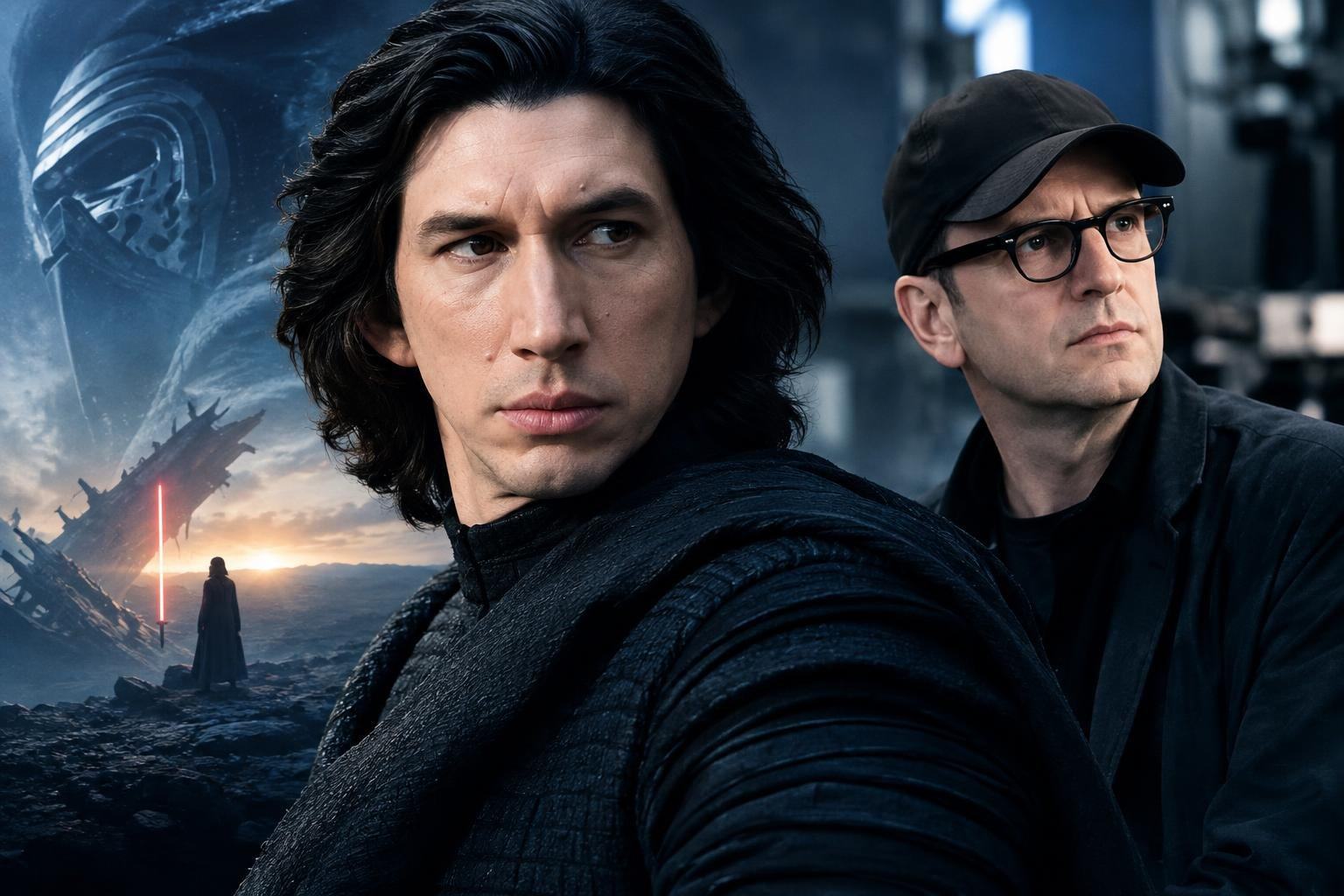
Adam Driver says the abandoned Star Wars film he and Steven Soderbergh developed around Ben Solo was driven by enthusiasm, not a paycheck. The actor says he and the director worked on the project without compensation, hoping they could find a way to make the story they wanted.
Speaking on Sam Fragoso’s Talk Easy podcast, Driver called the film one of the projects that came close to happening but ultimately fell apart. “We were going to do a Ben Solo movie, and that didn’t happen, and we worked on it for a long time,” he said. His account offers a rare glimpse of the creative commitment behind a film that Lucasfilm ultimately did not make.
A passion project that reached the screenplay stage
Driver said Soderbergh, who was attached to direct, worked on the project for nothing because the team had received encouragement from Lucasfilm leadership. Driver recalled Kathleen Kennedy expressing confidence in the idea, but stressed that there was no payment for their development work. The commitment, he said, came from loving the character and the proposed approach.
That approach appears to have progressed well beyond a casual conversation. Driver has previously said that he brought the idea to Soderbergh, who developed a story outline with Jules Asner, writing under the name Rebecca Blunt. Screenwriter Scott Z. Burns was then brought in to write a script. Driver described it as one of the coolest scripts he had worked on.
The project, publicly identified as The Hunt for Ben Solo, was pitched to Kennedy, Lucasfilm vice president Carrie Beck and chief creative officer Dave Filoni, who were receptive, according to Driver’s earlier account. But Disney executives Bob Iger and Alan Bergman ultimately rejected it. That distinction matters: enthusiasm from the creative and Lucasfilm teams did not amount to approval from the executives who could authorize the film.
The obstacle at the heart of a Ben Solo return
Ben Solo is a particularly complicated character to bring back. In Star Wars: The Rise of Skywalker, he turns away from his Kylo Ren identity, helps Rey and dies. Driver said the explanation he received for shelving the proposed movie was straightforward: “Ben Solo was dead.”
That answer points to a genuine storytelling challenge, not just a casting question. A film featuring Ben after his death would need to establish how and why he could return, or tell a story set at another point in his life. Driver has not disclosed the proposed film’s plot, so neither possibility should be mistaken for a confirmed detail.
Driver has spoken increasingly plainly about the cancellation. On The Rich Eisen Show, he said the project was officially over and that the team had worked on it earnestly for two years. In a later interview with the Associated Press, he called the decision “criminal” and questioned why a film directed by Soderbergh was not more appealing to the studio. Those are Driver’s views; Disney’s full reasoning beyond the explanation he says he was given is not established here.
What the near-miss says about Star Wars
The story is a reminder that a film can have an actor, an acclaimed director and a developed script—and still fail to get made. It also shows how difficult it can be for a franchise to revisit a character whose arc has already reached a definitive-seeming end. For viewers, the tantalizing detail is not a hidden plot revelation but the existence of a creative team willing to work for free simply to try to make the idea real.
The next Star Wars film scheduled for theatrical release is Star Wars: Starfighter, starring Ryan Gosling, which is due in cinemas on May 28, 2027. Ben Solo’s proposed return, by contrast, remains a story that never made it to the screen. Driver and Soderbergh may have believed in it enough to work without pay; the final decision shows that belief alone could not bring the galaxy’s most famous saga back to a character it had already said goodbye to.