
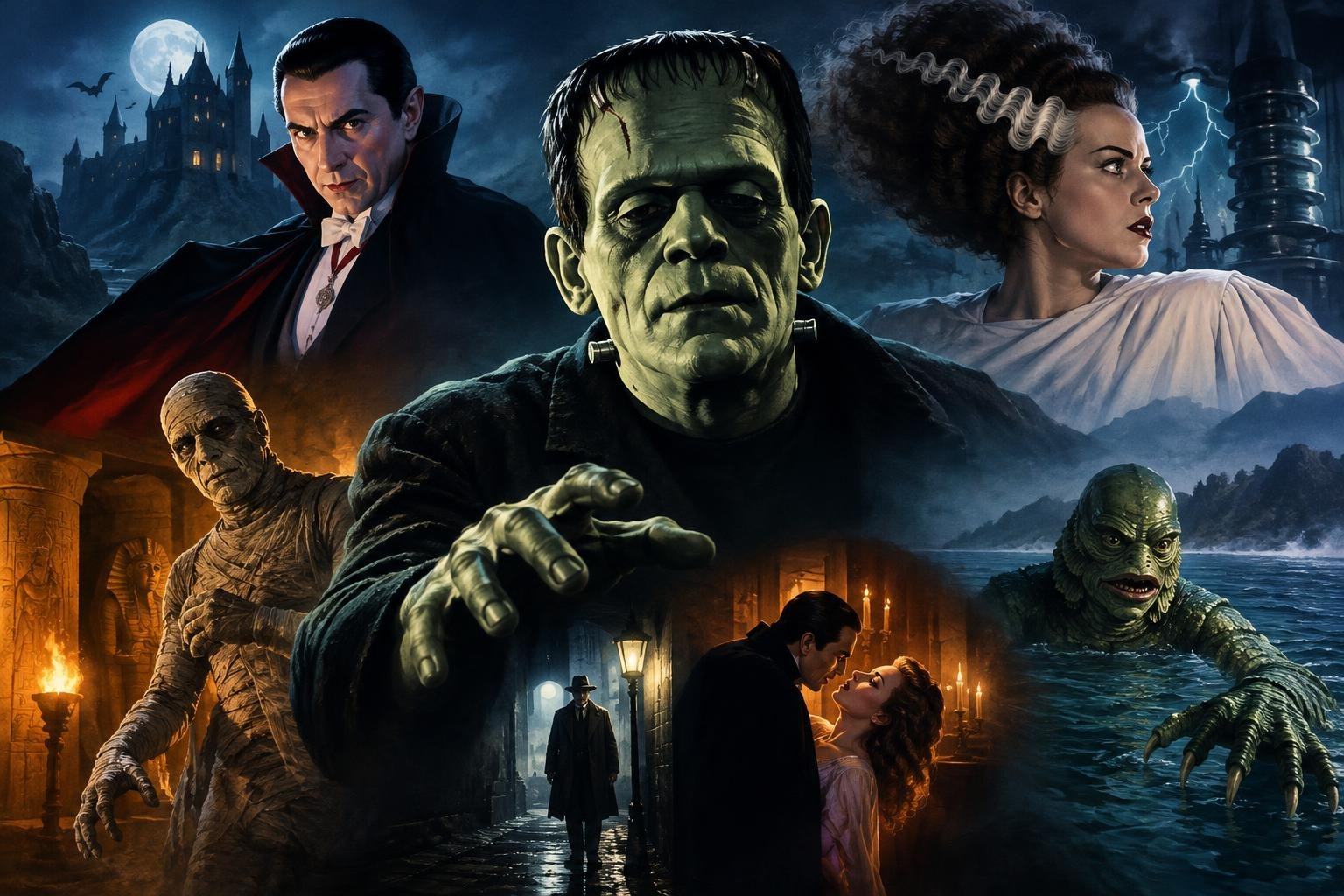
Universal’s classic monsters are so familiar that it is easy to think you already know them: Dracula’s cape, Frankenstein’s creature, the wrapped figure of the Mummy. But the films that fixed those images in popular culture are not just a parade of famous faces. They are a lively introduction to how horror changed with cinema itself—from silent spectacle to sound-era gothic, then to creature features shaped by the anxieties of the 1950s.
For newcomers, the best route is not necessarily to start at the beginning. A few carefully chosen films reveal the cycle’s shifts in style, its flashes of comedy and the surprising range beneath its monster-movie label.
Start with Frankenstein—and stay for the sequel
James Whale’s Frankenstein (1931) is the most rewarding first stop. Rather than trying to encompass all the philosophical questions in Mary Shelley’s novel, the film turns the story into a striking piece of screen drama. Boris Karloff’s creature, shaped by Jack Pierce’s makeup design, is at once imposing and strangely vulnerable; Colin Clive gives the scientist an intensity that makes his ambition feel dangerous.
The follow-up, Bride of Frankenstein (1935), is an even more adventurous watch. Whale brings in Dr Pretorius, whose theatrical manner and suggestive wit give the film an unusual comic edge, while Elsa Lanchester makes an unforgettable impression as the Bride. The film invites queer readings, particularly through its performances and the image of two men attempting to create life together. That interpretation is not the same as a confirmed statement of intent, but it remains part of what makes the sequel so rich to discuss.
Together, the two films offer a useful lesson in Universal’s strengths: atmosphere and visual invention matter as much as the creature at the centre of the story.
Meet Dracula, then compare his double
Tod Browning’s Dracula (1931) is essential viewing for a different reason. Bela Lugosi’s deliberate, accented delivery helped make his Count an enduring screen image, all menace and melancholy. One of the film’s best touches is a quiet one: when Renfield follows Dracula up a staircase, he becomes caught in a huge spiderweb. The Count’s passage leaves it undisturbed, suggesting his supernatural power without spelling it out.
There is also an unusual companion to seek out: the Spanish-language Dracula, made on the same sets after the English-language crew had finished for the day. George Melford directed it using the American version as a guide, but it is not merely a duplicate. Its more fluid camera work gives the story a different energy—and makes it fascinating to compare how the same material can change in another production.
Look beyond the headline monsters
Karloff returned in The Mummy (1932), a more emotionally shaded tale than its bandaged icon might suggest. For a change of mood, try Whale’s The Invisible Man (1933), which uses ingenious effects to turn an unseen central character into a source of escalating mischief. Claude Rains gives the role a gleeful, unnerving presence even when there is no visible figure to watch.
The Old Dark House (1932) is another worthwhile detour: a haunted-house story with a darkly comic streak. And Dracula’s Daughter (1936) brings a quieter sadness to the cycle through Gloria Holden’s Countess Marya Zaleska. Its story has often been read as a lesbian allegory, adding a layer of longing to a film that could otherwise be mistaken for a simple follow-up.
Follow the monsters into science fiction
Universal’s later films show how quickly horror could adapt. The 1940s brought crossovers such as Frankenstein Meets the Wolf Man (1943), where familiar creatures share the screen in a playful forerunner of today’s interconnected franchises. These team-ups are more about spectacle than the concentrated atmosphere of Whale’s films, but that is part of their appeal.
By the 1950s, the studio was turning toward science-fiction creatures. Jack Arnold’s Creature from the Black Lagoon (1954), Tarantula (1955) and The Incredible Shrinking Man (1957) trade gothic castles for threats shaped by science and changing social fears. The settings and monsters may be different, but the underlying pleasure remains: a familiar world made uncanny.
That is the best way into Universal horror: not as a checklist of iconic monsters, but as a record of filmmakers repeatedly finding new shapes for fear. Start with Frankenstein, follow its bold sequel, then let your curiosity lead from a spiderweb to a lagoon. The monsters endure, but the surprises are in how differently each film imagines them.